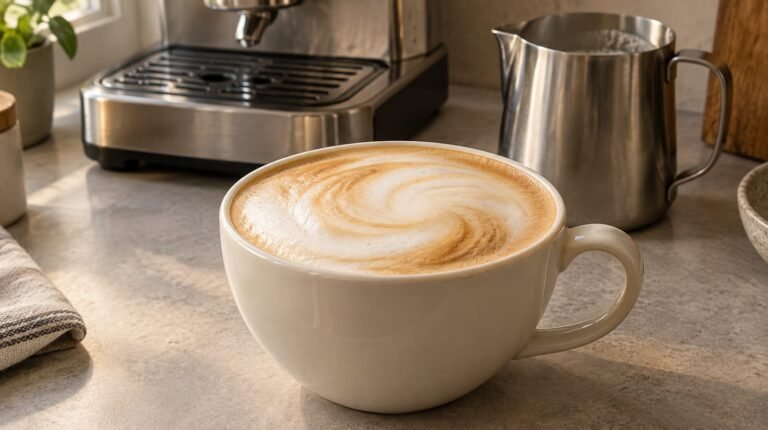
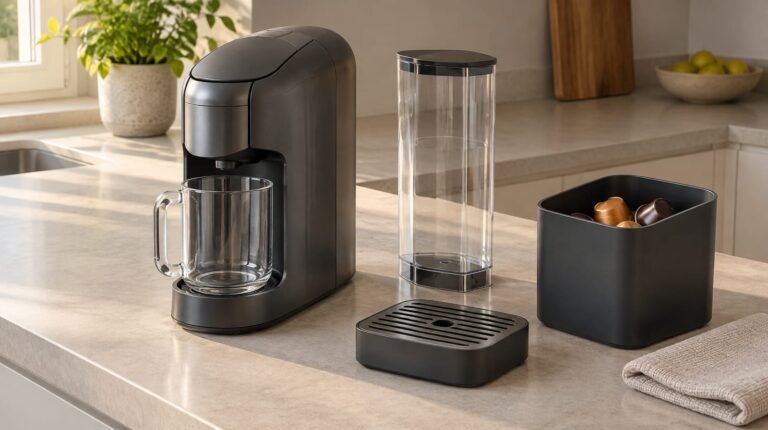
What is a bean-to-cup coffee machine? It is an appliance that automatically grinds beans, measures and compresses the grounds, then passes water through them to brew coffee.
Milk preparation can be automatic or involve using a steam wand, depending on the model. That makes the amount of preparation you want to handle a useful starting point when choosing.
There is still cleaning to do. The grounds container and drip tray need emptying daily or when prompted. Milk components need cleaning or rinsing after each milk-based drink.
This guide explains how the machine works, which tasks you can automate and how it compares with other coffee-machine types. It also shows how to think beyond the price of beans, counting cleaning and discarded coffee when working out your cost per drink.
This article was produced with the help of AI and reviewed before publication.
In this article
- What is a bean to cup coffee machine for home use?
- Follow a drink from the bean hopper to your cup
- Choose how much preparation to automate
- Calculate the real cost of each drink
- Keep the machine ready for tomorrow’s coffee
- Find a straightforward option for a UK home
- Choose the preparation and upkeep you can live with
What is a bean to cup coffee machine for home use?
A bean-to-cup coffee machine turns whole beans into espresso using a built-in grinder and a brewing mechanism housed inside the appliance. You will also see this category called fully automatic or super-automatic.
Those names describe the preparation the machine takes over. With De’Longhi’s fully automatic bean-to-cup machines, for example, you can request an espresso made from fresh beans by pressing a button. The appeal is having the coffee preparation handled within one appliance.
The main parts have straightforward jobs. The hopper is the container you fill with beans, while the water tank holds the water for brewing. The built-in grinder prepares coffee, and the internal brewing unit contains a filter basket and tamping mechanism. Machines usually include a water-heating system.
A milk system is an optional addition to that core equipment. Beanmachines Coffee Co. explains that coffee-only models make espresso and black coffee. Milk-capable machines extend the choice to drinks such as lattes, cappuccinos and flat whites. For a black-coffee drinker, milk capability therefore need not be a deciding feature.
Automatic preparation can still leave room to personalise your drink. Most bean-to-cup models let you adjust coffee strength, drink volume, brewing temperature and grind fineness, according to beanandcrema.co.uk. Many also store preferences for different users. Think of the category as a way to reduce hands-on preparation while retaining a choice over the coffee you receive.
Following a single drink through the machine makes those components easier to understand.
Follow a drink from the bean hopper to your cup

- Fill the water tank with water.
- Add whole coffee beans to the hopper. Keep pre-ground coffee out of this container, as beanandcrema.co.uk warns. Many models have a separate opening for a portion of ground coffee.
- Switch the machine on. The Guardian describes this as the starting point for preparing a drink on a fully automated machine.
- Place your cup on the drip tray.
- Choose your drink. The grinder processes beans immediately before brewing, with the machine measuring the coffee needed for the drink. As beanandcrema.co.uk explains, the grounds travel down a chute into the brewing chamber. A piston compresses them into a compact puck, performing the tamping for you. A pump then drives heated water through that puck, extracting espresso, which flows from the outlet into your cup. Once brewing finishes, the machine ejects the used puck into its grounds container.
For a milk-based drink, a machine with a one-touch carafe can also deliver heated, frothed milk into the cup, according to Coffee Blog. The order of coffee and milk delivery varies between machines. That adds another automated stage to the journey from ingredients to finished drink.
Choose how much preparation to automate
Choose an internal brewer or a portafilter
Decide how much coffee preparation you want to handle yourself. With traditional espresso equipment, you grind the beans, compress the grounds in the portafilter and start the water flow, as Rocco Espresso explains.
Coffee Blog classifies the Sage Barista Express and Barista Pro as espresso machines with integrated grinders. A built-in grinder alone does not qualify a portafilter machine as bean-to-cup under its definition.
Assisted designs occupy a middle ground. Coffee Blog explains that Sage’s hybrid portafilter machines automate dosing and tamping, with automatic milk preparation on some models. Choose this approach if you want assistance while retaining portafilter preparation.
For the least involvement in preparing the coffee puck, favour an internal brewer. Choose traditional equipment if learning to grind and tamp is part of the appeal.
Choose a milk system and adjustable settings
For espresso and black-coffee drinkers, a coffee-only model is the straightforward starting point. For regular lattes and cappuccinos, prioritise milk capability.
Compare milk systems by the work you want to do. De’Longhi offers manual steam nozzles for hand-frothing and LatteCrema Hot systems that produce foam automatically at a button press. Choose automatic frothing when convenience leads your decision.
Coffee Blog says entry-level panarello attachments generally give you more control over milk heat than foam consistency. It finds one-touch carafes tend to give more texture control than panarello wands. That distinction matters if milk texture is a priority.
Treat grind, strength, serving volume, brewing temperature and saved profiles as a buying checklist. Coffee Friend says basic automatic machines generally offer limited customisation. Prioritise profiles for differing household preferences, and adjustable volume for your preferred serving.
Strength adjustment also affects ingredient use. Coffee Blog explains that increasing a bean-to-cup machine’s strength setting makes it grind more coffee.
Once you have chosen how much preparation to automate, compare the cost of the drinks you will actually consume.
Calculate the real cost of each drink
Judge value over a chosen ownership period, using the drinks you actually consume. A useful calculation includes the machine, ingredients, discarded coffee and milk, cleaning, filters, water, energy and servicing.
Count the coffee and milk you discard
Allow a budget for ingredients that never reach a finished drink. West Berkshire Roastery recommends discarding a grinder purge when changing beans in a shared hopper to reduce carryover from the previous coffee.
Count that discarded coffee in your ingredient spending. Apply the same accounting to leftover milk you throw away and drinks you abandon while adjusting recipes. Divide by the drinks consumed, excluding discarded drinks.
Include cleaning and ownership costs
Coffee Blog reports entry prices slightly below £300. ADS Coffee Supplies gives a typical bean-to-cup purchase range of £400–£2,000. Treat these as reported guide figures when setting a budget.
ADS Coffee Supplies includes consumables and maintenance in ownership spending, with water and energy adding smaller amounts. It also identifies replacement filters as a recurring expense and says servicing complexity can increase with integrated grinders and milk systems.
For a repeatable comparison, use the same ownership period for each machine:
- Choose the period you want to budget for.
- Estimate how many drinks you will actually consume during that period.
- Add the purchase price, all consumed and discarded ingredients, cleaning supplies, replacement filters, water, energy and servicing for that period.
- Divide the total spending by your estimated number of consumed drinks.
Compare beans with pods
Coffee Blog estimates coffee ingredients at around half a penny per drink with the cheapest beans, or 20p with average-priced freshly roasted speciality beans. Its capsule estimate spans approximately 15p–£1.50 per drink.
Those estimates overlap: speciality beans can cost more per drink than the cheapest capsules. Ingredient prices alone cannot establish the full cost.
Coffee Blog says Nespresso generally costs less upfront, while bean-to-cup offers more scope to adjust espresso. Its reviewer Kev favours bean-to-cup for people mainly drinking larger coffees or milk drinks.
For those drink preferences, put bean-to-cup on your shortlist. For a tight purchase budget, compare Nespresso too. Let total ownership spending, including cleaning and discarded purge coffee, decide the financial case.
Keep the machine ready for tomorrow’s coffee
Allow time for care alongside drink preparation. beanandcrema.co.uk estimates several minutes of daily maintenance, plus additional weekly work. Treat that time as part of the convenience calculation when choosing your machine.
Use this checklist to organise the jobs. The timings below follow beanandcrema.co.uk’s care guidance, with cleaning-programme advice from Meraki.
- Empty the grounds container and drip tray every day, or when the machine asks you to do so.
- Clean or rinse the milk components after each milk-based drink. Make this part of finishing the drink.
- Wash the milk carafe’s parts daily if you use it every day. This is an additional job alongside the after-drink rinse.
- Rinse a removable brewing unit weekly, only where your model’s manual permits it. Check its washing restrictions first: beanandcrema.co.uk warns that many manufacturers prohibit detergents or dishwasher cleaning.
- Run the machine’s cleaning programmes at its recommended intervals, as Meraki advises. Put these on your care checklist alongside the removable-part jobs.
- Descale when the machine prompts you. Expect more frequent descaling in hard-water conditions, according to beanandcrema.co.uk.
- Replace the water filter on the schedule specified for your machine. beanandcrema.co.uk recommends using the manual’s replacement guidance, so use that interval when planning filter purchases.
Use that cleaning commitment alongside your drink preferences and budget to narrow the shortlist.
Find a straightforward option for a UK home

Start with a shortlist built around your priorities: value, bean choice or simple controls. Treat the price bands here as the reviewers’ reported categories, rather than live offers.
De’Longhi Magnifica Start is the strongest starting point for a value-focused beginner. The Guardian names it both its overall winner and its budget choice. Reviewer Sasha Muller praises the coffee it makes, its ease of operation and its affordability. That combination makes it the first option to consider if you want a straightforward introduction.
De’Longhi Rivelia is the Guardian’s leading choice in its under-£1,000 category. Muller highlights its coffee quality, interface and interchangeable bean containers. Put this on your shortlist if choosing between beans appeals to you and the interface matters enough to influence your purchase.
Jura C8 takes the Guardian’s recommendation for simplicity. Muller credits its easy-to-understand interface, practical design and coffee quality. It is worth comparing with the Magnifica Start if ease of use is your deciding factor. Both receive praise for straightforward operation, but the Guardian gives the Magnifica Start the budget verdict.
Gaggia Anima is Coffee Blog reviewer Kev’s choice for traditional simplicity in the under-£500 category. He favours its ease of use and physical buttons. Choose this as your comparison point if you prefer pressing a dedicated control when making coffee.
For a first shortlist, begin with the Magnifica Start. Add the Anima for button-led simplicity, the C8 for its simplicity verdict, or the Rivelia for its bean-container flexibility.
Choose the preparation and upkeep you can live with
Choose a bean-to-cup machine if you want less hands-on preparation than traditional espresso equipment requires. Decide separately how much milk preparation you want to automate.
Make room for maintenance in that decision. beanandcrema.co.uk estimates several minutes of daily care, with additional work each week.
You can now compare machines by the drinks you want, the work you will do and your total budget. Count discarded coffee and milk alongside cleaning and ownership costs when estimating each consumed drink’s cost.
Sources
- Bean-to-Cup Coffee Machines Explained (2026 Guide) — coffeefriend.co.uk
- Bean-to-Cup Coffee Machine Guide for Home Use — merakitech.com
- What is a bean-to-cup coffee machine and is it worth it? — beanandcrema.co.uk
- Best Bean to Cup Coffee Machine in 2025: Tested & Reviewed — coffeeblog.co.uk
- Automatic Bean-to-Cup Coffee Machines — delonghi.com
- What is a Bean to Cup Coffee Machine? — beanmachines.co.uk
- The 10 best bean-to-cup coffee machines in the UK, tried and tested — theguardian.com
- Traditional vs Bean-to-cup Coffee Machines — roccoespresso.co.uk
- Are bean to cup coffee machines better than Nespresso? — coffeeblog.co.uk
- Decaf Coffee for Bean-to-Cup Machines: The UK Guide — wbroast.co.uk
- Are Home Coffee Machines Worth It? — ads-coffee-supplies.co.uk