Coffee machine maintenance starts with separating the jobs you do after making drinks from those you put on a calendar. This guide helps you build that routine for a manual espresso or bean-to-cup machine, including Sage models.
For machines making two to five cups daily, Sage recommends cleaning most components weekly. De’Longhi advises removing milk residue immediately, before it hardens. Use the weekly interval as a starting point for recurring jobs, while keeping milk cleaning tied to making drinks.
The guide takes you through everyday cleaning, deeper coffee and milk-pathway care, water management and descaling. Separate instructions cover the two machine types, with compatibility checks for backflushing and clear boundaries between owner upkeep and faults needing repair.
This article was produced with the help of AI and reviewed before publication.
In this article
- Build your household coffee machine maintenance routine
- Deep-clean the coffee and milk pathways
- Manage your water and complete descaling
- Check common faults and arrange servicing
- Keep your routine clear and manageable
Build your household coffee machine maintenance routine
Experts interviewed by The Guardian favour frequent light cleaning over occasional intensive sessions. Make the after-coffee routine your starting point.
After using a manual espresso machine
- Remove the spent grounds after brewing.
- Rinse the basket and portafilter.
- Flush the group head with the portafilter removed. Clive Coffee recommends 1–3 seconds.
- After steaming milk, wipe the wand with a separate damp cloth.
- Purge the wiped wand. Clive Coffee recommends 1–2 seconds.
- Empty and rinse the drip tray.
- Replace standing reservoir water with fresh water before finishing for the day.
After using a bean-to-cup machine
- Empty the grounds container when prompted.
- Empty and rinse the drip tray.
- Run the milk rinse after milk drinks. For De’Longhi milk carafes, select the dial’s clean setting or press the top-mounted clean button.
- Wash removable milk-contact parts as instructed for your machine.
- Replace standing reservoir water with fresh water before finishing for the day.
Put recurring jobs on your calendar
Use a dated checklist covering component cleaning, cleaning programmes, descaling and filter changes. Record milk use, water hardness, alerts and completed jobs to make it useful for your household.
Sage recommends cleaning the grinder and water tank every two or three weeks. Its upkeep guidance also covers the group head, steam wand, descaling and regular water-filter replacement.
Run automatic cleaning programmes regularly where fitted, as The Guardian recommends. Descaling frequency depends partly on water hardness and use. For De’Longhi machines in hard-water areas, replace the filter when prompted.
With after-use care and recurring jobs organised, you can turn to the deeper cleaning tasks that suit your machine.
Deep-clean the coffee and milk pathways
Backflush a compatible espresso machine
Use a blind basket only if your machine supports backflushing. Coffee Friend gives this manual sequence:
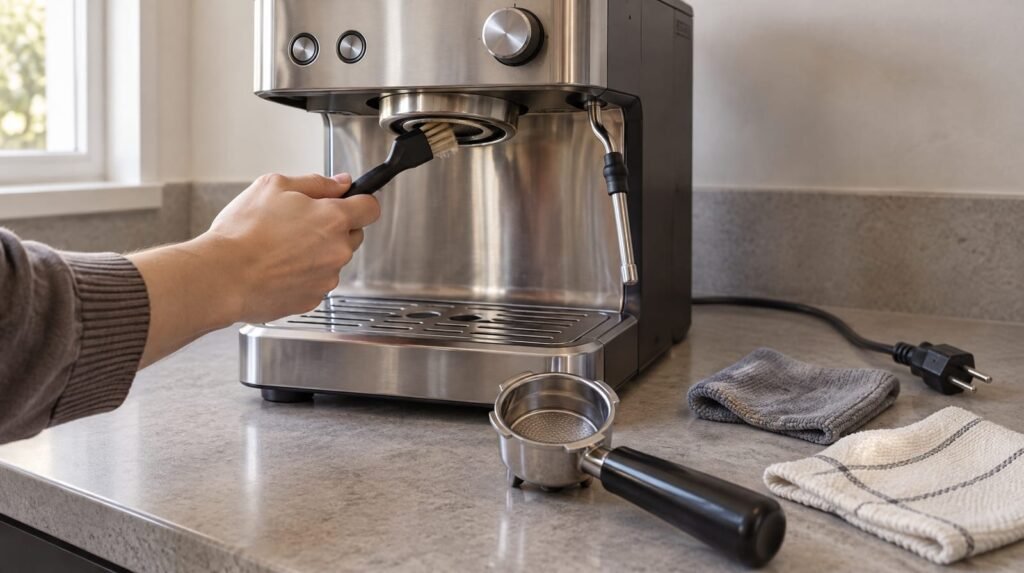
- Remove the portafilter and brush around the group head’s inner edges.
- Fit a blind basket containing one dedicated cleaning tablet, then lock the portafilter into place.
- Run water for 10 seconds, then pause for 10 seconds. Repeat this cycle 5–10 times.
- Remove the portafilter and flush the group head, using the discharged water to rinse the portafilter.
- Refit the portafilter without a tablet. Complete five rinse cycles, each with 10 seconds running and 10 seconds paused.
- Make an espresso and discard it.
Soak removable coffee-contact parts
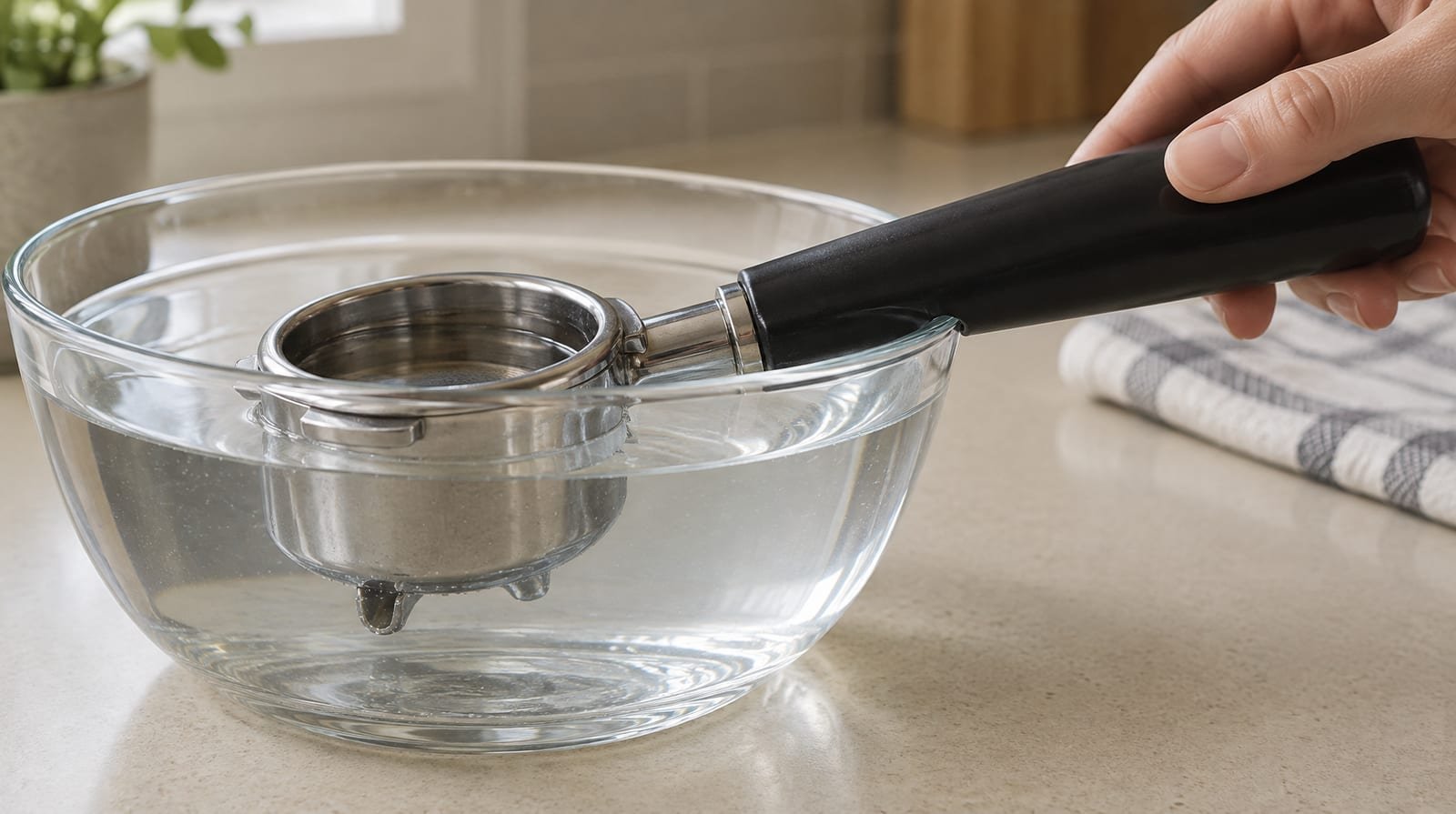
For a deeper portafilter clean, use Coffee Friend’s tablet-soak method. Keep the handle above the solution unless immersion is permitted.
- Dissolve a cleaning tablet in warm water.
- Immerse the basket and the portafilter’s metal end for 15–30 minutes.
- Clean the soaked parts with a sponge.
- Rinse everything thoroughly.
Choose a dedicated milk-system cleaner for milk deposits. ADS Coffee Supplies says these products target milk fats, proteins and sugars.
Clean a bean-to-cup brewing unit
For a removable De’Longhi brewing unit, make this a monthly job:
- Disconnect the power and let heated surfaces cool before removing parts.
- Take out the brewing unit.
- Rinse it with warm water, without detergent or solvents.
- Leave it to dry.
- Refit the dry unit.
For a machine with a fixed brewing unit, use the programme route:
- Run the machine’s cleaning programme, following its prompts and specified cleaner requirements. Leave the fixed unit in place instead of forcing access through a panel.
The next part of your maintenance calendar brings together water hardness, filter changes and descaling.
Manage your water and complete descaling
Check hardness and track filter changes
- Check your water hardness using the machine’s supplied test kit or a postcode-based water hardness map, as De’Longhi recommends.
- Set the machine’s hardness level to match the result, using its model-specific instructions to select the corresponding setting.
- Record filter-replacement and descaling dates. Replace filters at the manufacturer’s specified interval, resetting the filter setting where required.
Run a complete descaling cycle
Descaling removes waterborne mineral deposits. Coffee oils and milk deposits need separate cleaning. Treat these as separate jobs on your calendar.
Choose a compatible coffee-machine descaler. The Guardian warns that excessive doses can damage internal metal, while vinegar can permanently taint drinks and degrade rubber components.
- Empty the drip tray before starting.
- Prepare the water filter for descaling as specified for your machine, including removal if instructed.
- Add the compatible descaler at the concentration specified for your model.
- Start the dedicated descaling programme where fitted, following the machine’s instructions for the cycle.
- Let the entire programme finish, including its pauses and fresh-water rinsing.
- Discard the discharged liquid.
- Rinse the reservoir.
- Refill the reservoir with fresh water.
- Complete all required water-only cycles before making coffee. The Guardian recommends multiple fresh-water cycles after descaling.
With cleaning and water care covered, the remaining question is when a change in performance needs more than routine upkeep.
Check common faults and arrange servicing
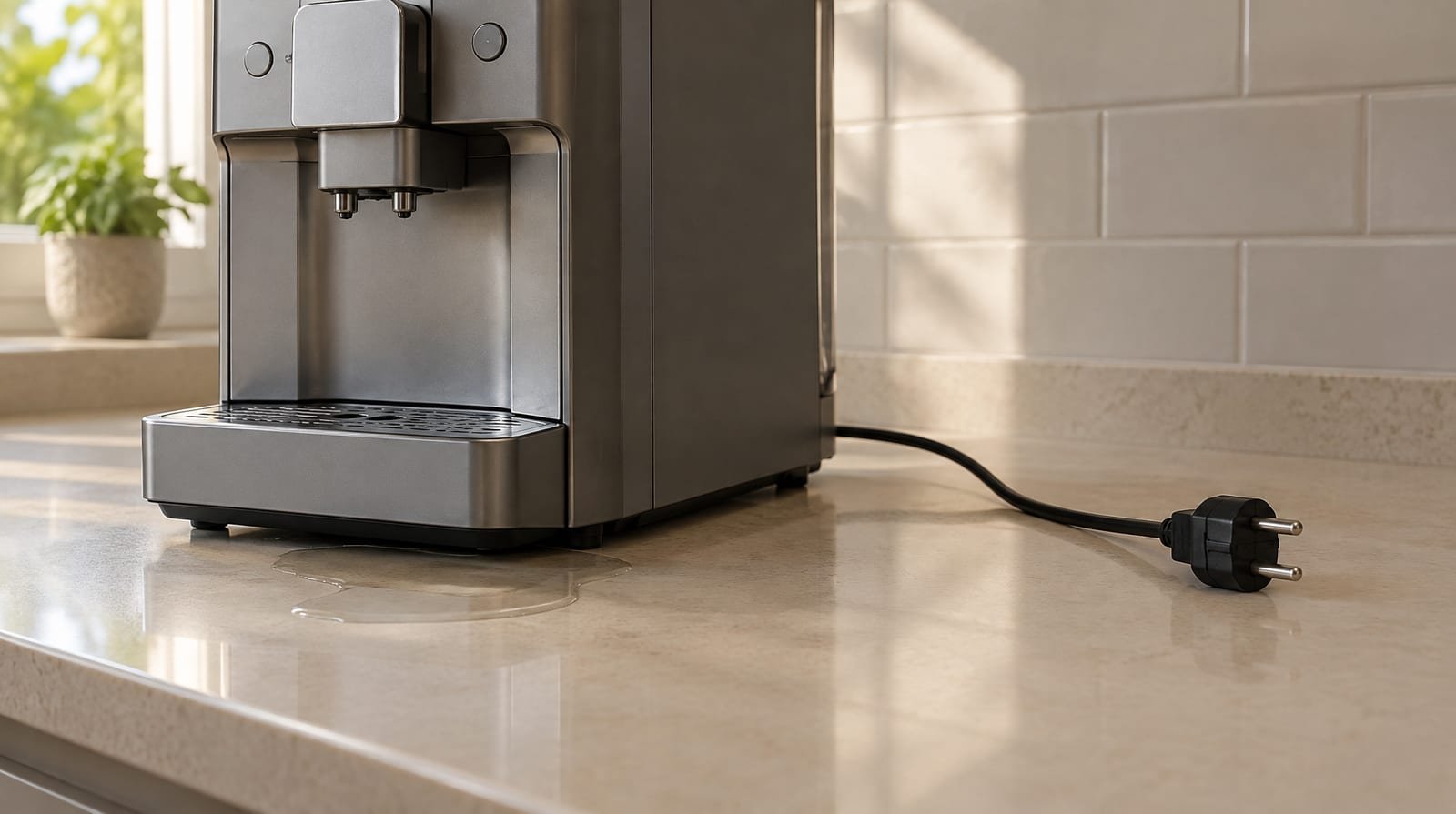
Make safe checks when performance changes
Poor flow can indicate scale, an obstruction or pump trouble. Weak steam can come from milk deposits, scale or valve faults. Noise can signal a dry pump, jammed grinder or worn parts. Persistently cold coffee can indicate a boiler or thermoblock fault.
- For unusual noise, check that the reservoir contains water and sits correctly.
- For leaks, inspect the visible reservoir for cracks and accessible seals and gaskets for damage.
- Before handling a weak steam wand, disconnect the power and let heated surfaces cool.
- Detach the wand tip only if your machine permits its removal.
- Soak the detached tip. Bria, interviewed by The Guardian, recommends milk-cleaning solution for severely baked-on deposits.
- Rinse the washed tip thoroughly.
- Leave the tip to dry before refitting it.
Stop using the machine for electrical faults, internal or persistent leaks, or continuing heating failures. Contact the manufacturer for these faults or unresolved errors. Keep the powered casing closed.
Decide when servicing is due
Use your model’s manufacturer-prescribed service schedule. Café du Monde recommends at least annual servicing for most commercial machines and six-monthly servicing in busy hospitality settings. Those commercial recommendations should not become a blanket household interval.
Professional servicing complements cleaning. Café du Monde says engineers assess internal wear, safety, pressure and temperature regulation, reaching mechanisms ordinary cleaning cannot fully evaluate.
Find a repairer for your machine
For Manchester, Stockport and nearby areas, Espresso Repair Shop repairs brands including Sage, De’Longhi, Jura and Gaggia. It offers free quotations and confirms charges before work starts.
For a nationwide domestic repair option, Espresso Rescue provides packing guidance and can arrange collection when needed.
Before booking, ask about your exact model, access to replacement parts and the quotation. Some machines require specialist training and components that every repairer cannot obtain. Espresso Repair Shop says parts availability also affects turnaround.
Keep your routine clear and manageable
You can now organise maintenance around your machine’s cleaning methods, milk use and water conditions. Use your household checklist to keep completed work and upcoming jobs together.
Keep coffee-path cleaning, milk cleaning and descaling as separate calendar entries. Descaling tackles mineral deposits, while coffee-contact parts and milk systems need their own cleaning.
Keep the repair boundary equally clear. If leaks, electrical faults or heating problems persist, stop using the machine and contact its manufacturer.
Sources
- Cleaning & Maintenance — sageappliances.com
- Coffee Machine Care Guide — delonghi.com
- From cloths to cleaning tablets: how to make your coffee machine last longer — theguardian.com
- Coffee Machine Maintenance Checklist — cocinare.com
- Espresso Machine Cleaning Guide — coffeefriend.co.uk
- Espresso Machine Cleaning & Maintenance Guide — clivecoffee.com
- Coffee Shop Coffee Machine Maintenance Guide — drcoffee.com
- Best Cleaning Products for Commercial Coffee Equipment Care — ads-coffee-supplies.co.uk
- Coffee Machine Not Working? 10 Common Problems & Fixes — ads-coffee-supplies.co.uk
- Commercial coffee machine excellence: How to clean and maintain your coffee machine — cabercoffee.com
- How often should a commercial coffee machine be serviced? — cafedumonde.co.uk
- espressorepairshop.co.uk — espressorepairshop.co.uk
- Espresso Rescue — espressorescue.co.uk
- How Often Should a Coffee Machine be Serviced? — bridgecoffeeroasters.co.uk